
Finance Technology Trends
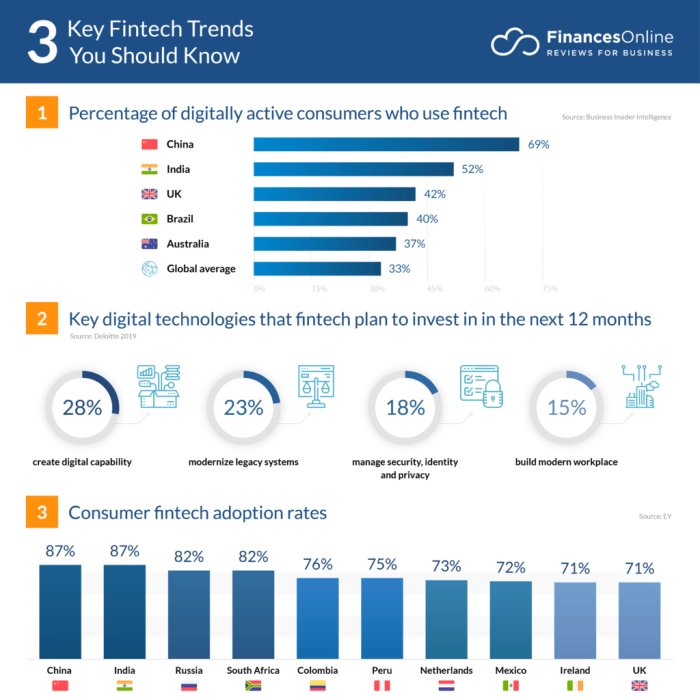
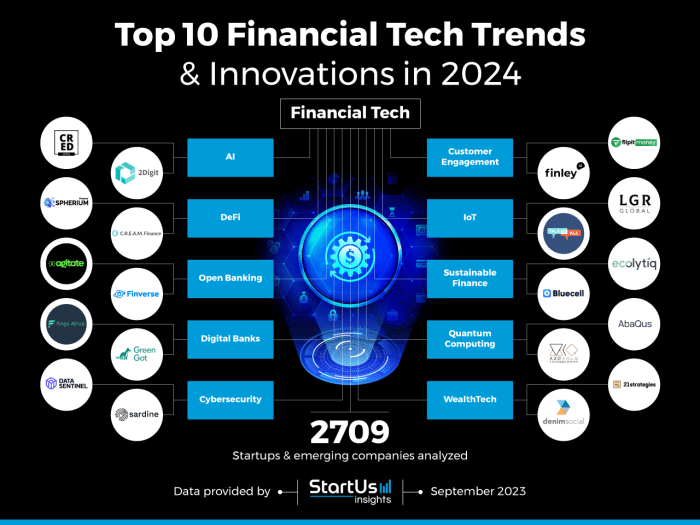
The current landscape of finance technology trends is rapidly evolving, with innovative technologies reshaping the traditional banking industry. These advancements are not only improving efficiency and customer experience but also challenging the established norms of financial services.
Innovative Technologies in Finance
- Blockchain Technology: Blockchain has revolutionized the way transactions are recorded and verified, offering secure and transparent processes.
- Artificial Intelligence (AI) and Machine Learning: AI-powered tools are being used for fraud detection, risk assessment, and personalized customer services.
- Robotic Process Automation (RPA): RPA streamlines repetitive tasks, reducing operational costs and improving accuracy in financial processes.
Impact of Fintech on Traditional Banking
- Disruption of Traditional Models: Fintech companies are challenging traditional banks by offering innovative products and services, leading to increased competition.
- Enhanced Customer Experience: Fintech solutions provide quicker and more convenient ways for customers to manage their finances, leading to higher satisfaction levels.
- Cost Efficiency: Fintech allows for cost-efficient operations, reducing overhead costs associated with traditional banking services.
Blockchain and Cryptocurrencies
Blockchain technology has been transforming financial transactions by providing a secure and transparent way to record and verify data. This decentralized system eliminates the need for intermediaries, reducing costs and increasing efficiency in transactions.
Role of Cryptocurrencies
Cryptocurrencies, such as Bitcoin and Ethereum, are reshaping the future of finance by offering a digital alternative to traditional currencies. These digital assets are built on blockchain technology, enabling peer-to-peer transactions without the need for a central authority.
- Cryptocurrencies offer faster and cheaper cross-border transactions compared to traditional banking systems.
- They provide financial inclusion to the unbanked population, allowing access to financial services through mobile phones.
- The decentralized nature of cryptocurrencies makes them resistant to censorship and fraud.
Security Features of Blockchain
Blockchain technology offers enhanced security features compared to traditional financial systems. The use of cryptographic algorithms and decentralized consensus mechanisms ensures the integrity and immutability of data stored on the blockchain.
Looking for professional backlink services? Look no further than jasa backlink pro for all your backlink needs. They offer top-notch services to help boost your website’s SEO ranking.
Blockchain’s tamper-resistant nature makes it extremely difficult for malicious actors to alter transaction records, providing a high level of security.
- Blockchain’s transparent and auditable nature increases trust among participants in financial transactions.
- The use of smart contracts automates and enforces agreements, reducing the risk of fraud and human error.
- Blockchain’s distributed ledger system eliminates single points of failure, enhancing resilience against cyber attacks.
Artificial Intelligence in Finance
Artificial Intelligence (AI) is revolutionizing the financial industry by providing advanced tools for predictive analysis, risk management, and fraud detection.
Utilization of AI in Financial Institutions
AI algorithms are being used in financial institutions to analyze vast amounts of data and identify patterns that can help predict market trends, customer behavior, and investment opportunities. By automating these processes, AI can provide valuable insights in real-time, allowing financial professionals to make informed decisions quickly and accurately.
Benefits of AI-driven Algorithms
Risk Management
AI-powered algorithms can assess risks more effectively by analyzing historical data, market trends, and external factors to predict potential threats and opportunities. This helps financial institutions optimize their risk management strategies and minimize potential losses.
Fraud Detection
AI can detect fraudulent activities by analyzing transaction patterns, identifying anomalies, and flagging suspicious behavior in real-time. This proactive approach helps prevent financial crimes and protect both the institution and its customers from cyber threats.
Ethical Considerations
The use of AI in finance raises ethical concerns surrounding privacy, bias, transparency, and accountability. It is crucial for financial institutions to ensure that AI technologies are used responsibly, ethically, and in compliance with regulations to maintain trust and integrity in the industry.
Are you a fan of coin gambling machines with superhero themes? If so, you should check out this exciting coin gambling machine with superhero themes that will surely keep you entertained for hours!
Mobile Banking and Payment Solutions
Mobile banking and payment solutions have revolutionized the way we handle our finances, providing convenience and accessibility like never before. As more people turn to their smartphones for everyday tasks, the growth of mobile banking apps continues to reshape the landscape of traditional banking methods.
Security Measures in Mobile Payment Solutions
- Encryption technology: Mobile payment solutions use encryption to secure transactions and protect sensitive data, ensuring that financial information is kept safe from cyber threats.
- Biometric authentication: Many mobile banking apps now offer biometric authentication options such as fingerprint or facial recognition, adding an extra layer of security to verify transactions.
- Tokenization: Tokenization replaces sensitive data with unique tokens, reducing the risk of fraud and unauthorized access to payment information.
- Multi-factor authentication: Implementing multi-factor authentication requires users to provide multiple forms of verification before accessing their accounts or making transactions, enhancing security measures.
Future Trends in Mobile Banking and Payment Technologies
- Integration of AI and machine learning: Mobile banking apps are expected to leverage AI and machine learning algorithms to provide personalized recommendations, detect fraud, and improve customer service.
- Enhanced user experience: As competition in the mobile banking sector increases, apps will focus on enhancing user experience by offering seamless navigation, personalized interfaces, and innovative features.
- Expansion of contactless payments: With the rise of NFC technology and digital wallets, contactless payments through mobile devices are expected to become more prevalent, offering a convenient and secure way to make transactions.
- Blockchain integration: Mobile banking apps may explore integrating blockchain technology to enhance security, transparency, and efficiency in transactions, paving the way for decentralized financial services.
Final Review
As we conclude this discussion on finance technology trends, it becomes evident that the intersection of finance and technology is paving the way for a dynamic future in the financial sector. With blockchain revolutionizing transactions, AI driving predictive analysis, and mobile banking shaping the way we interact with finances, the potential for growth and innovation is limitless.
FAQ Overview
How are finance technology trends impacting traditional banking systems?
Finance technology trends are challenging traditional banking systems by introducing innovative solutions that streamline processes and enhance customer experience.
What are some examples of innovative technologies transforming the finance industry?
Examples include blockchain technology for secure transactions, AI-driven algorithms for risk management, and mobile banking apps for convenient financial services.
How is AI being utilized in financial institutions for predictive analysis?
AI is used to analyze data patterns and predict future trends, helping financial institutions make informed decisions and mitigate risks.